Fashion Photography Examples and AI Styles 2026
Explore editorial, lookbook, street-style and AI fashion imagery, plus practical workflows for garment accuracy, consent and brand consistency.
Turn this inspiration into your own images.
Bring a brief or a reference image. Explore the possibilities with four AI models.
Free credits to start · No credit card

Fashion photography examples in 2026 include traditional studio photographs, editorial narratives, commercial lookbooks, street-style images, fully synthetic scenes and AI-enhanced hybrids. The most useful examples show more than an attractive model: they communicate the designer's concept, preserve garment details and fit the intended channel. This guide explains how to study, plan and produce each visual approach.
Fashion visuals in 2026 in short
- Fashion imagery now spans studio, editorial, lookbook, beauty, street-style, fully generated and hybrid formats.
- One creative brief can produce 3 workflows: conventional photography, fully synthetic generation or photography enhanced with AI.
- AvocAIdo currently runs 4 models in parallel: Grok Imagine, Seedream 5 Lite, NanoBanana 2 and GPT Image 2.
- AvocAIdo supports 5 aspect ratios: 1:1, 16:9, 9:16, 3:4 and 3:2.
- Exact logos, seams, prints and garment proportions require a separate visual review before publication.
- New York's Fashion Workers Act has required written approval for creating or using a model's digital replica since June 19, 2025.
- Academic research warns that generative systems can reproduce narrow ideals centred on young, thin, white and symmetrical femininity.
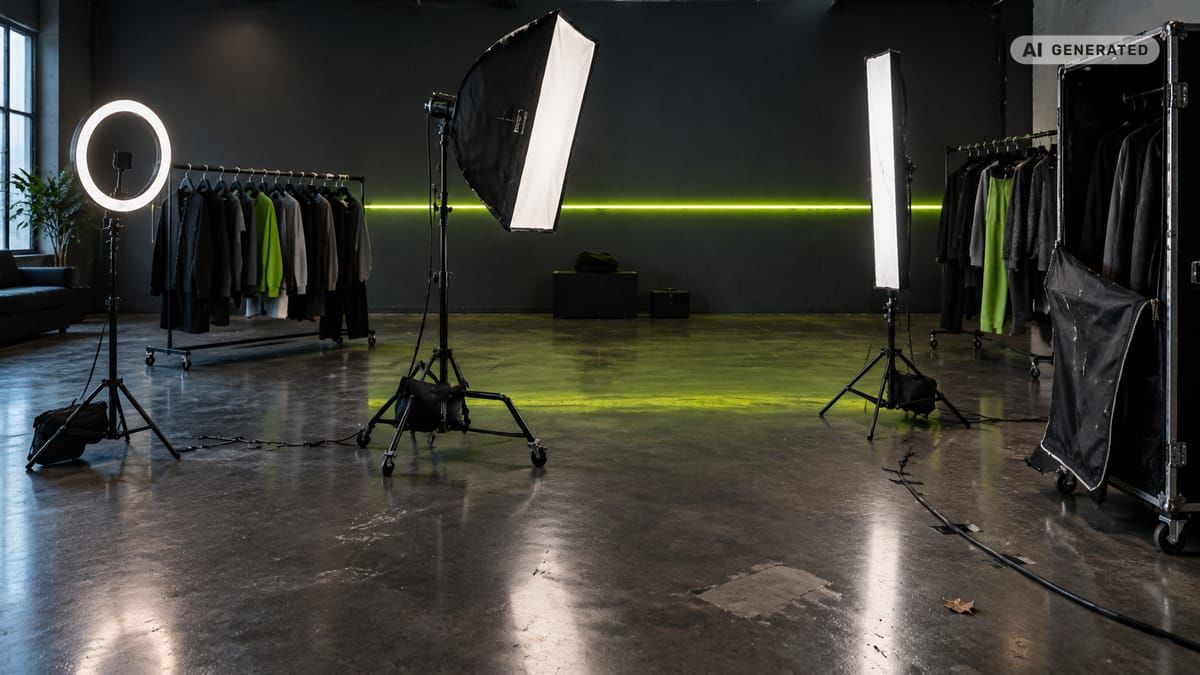
Fashion image planning checklist
- Define whether the image must sell a garment, communicate a story or build brand recognition.
- Select one hero garment and document its seams, print, logo, hardware, texture and fit.
- Create a mood board covering colour, lighting, location, movement, casting and composition.
- Choose conventional, fully generated or hybrid production before developing individual shots.
- Obtain written permission for every identifiable person and proposed digital-replica use.
- Produce separate crops for ecommerce, magazine, campaign and social placements.
- Compare every generated garment against approved product reference photographs.
- Review hands, joints, skin, hair, shadows, reflections and background geometry.
- Run a representation review covering body shape, age, skin tone and cultural dress.
- Record which elements were photographed, generated and edited before approving publication.
Made with AvocAIdo
Your product. Your style. Four possibilities.
Turn a product photo and a style reference into studio-style images. Compare AI models in one place.

Saved examples · 4 AI models



Free credits to start · No credit card
What defines fashion photography in 2026?
Fashion photography presents clothing, accessories, beauty or designer identity through deliberate art direction. It differs from a simple record of a product because styling, casting, pose, lighting, movement and environment work together to shape how the fashion is understood.
The field now includes at least 3 production approaches. Conventional photography captures a physical model and garment. Fully generated production synthesises the subject, clothing and scene. A hybrid begins with real photography and uses AI for controlled tasks such as extending a backdrop, developing scene variations or adapting composition. Understanding how AI photo editing works and why brands need it provides useful context for these newer workflows.
Methodology: this guide is based on AvocAIdo's published product information, current industry documentation, legal commentary and academic research available as of September 7, 2026, without an original shoot or independent image evaluation.
AI does not eliminate the principles established by generations of fashion photographers. Successful images still need a visual hierarchy, a clear relationship between the body and clothing, controlled colour and an identifiable point of view. The movement may be physical or simulated, but it must serve the garment or story.
The major change is scalability. One approved art direction can now be interpreted across 5 aspect ratios, multiple subjects and several campaign contexts. This makes visual governance more important: producing additional images is useful only when the collection remains recognisable and the garments remain truthful.
Which classic fashion photography examples still matter?
Historic fashion imagery continues to influence contemporary work through reusable visual archetypes. The Victoria and Albert Museum's overview of 100 years of fashion photography illustrates how these archetypes evolved. Rather than copying a particular photographer, brands can study the structural decisions behind iconic magazine and campaign images.
The controlled studio portrait
A studio portrait removes environmental distractions. A plain or graduated background, sculpted light and precise posing direct attention to silhouette, tailoring and body language.
Its AI equivalent can explore alternative poses, lighting directions or background colours before a physical shoot. For publication, teams should review whether generated shadows match the pose and whether the garment's volume remains physically credible.
The cinematic editorial
Editorial fashion photography builds a world around a collection. Location, props, sequence and character create a story that can extend across several magazine pages or a digital campaign.
A useful sequence might contain 6 frames: an establishing image, a full-length silhouette, a movement frame, a portrait, a garment detail and a closing image. Each frame should advance the visual narrative rather than repeat the same pose.
The movement study
Flowing fabric, walking poses and wind-blown styling turn garment behaviour into the subject. Movement can communicate softness, weight, energy or rebellion.
Generated movement deserves close inspection. Fabric should respond consistently to gravity and body position, while prints should follow folds instead of floating independently across the image.
The location contrast
Fashion photographers often place refined clothing against an unexpected street, industrial or natural environment. The contrast makes both the designer's work and the location feel more distinctive.
For AI production, the background should support the styling rather than compete with it. Limiting the palette to 2 dominant colours and 1 accent is a practical way to retain hierarchy.
Which fashion photography examples suit each channel?
A strong fashion image is designed for a specific job. Commercial, editorial and social formats may use the same collection, but they should not rely on the same composition.
Commercial and ecommerce photography
Commercial images prioritise garment readability. The viewer needs to see shape, length, fit and important construction details without ambiguous lighting or heavy obstruction.
An ecommerce set can include a front view, back view, side view and 3 detail crops. AI product photography with models may help explore casting or scene variations, but every output should be compared with the physical garment before it is presented as a product representation.
Lookbook photography
A lookbook communicates how individual pieces form a collection. Backgrounds and poses are often restrained so colour relationships, layering and silhouettes remain easy to compare.
Consistency matters more than dramatic variation. Camera height, focal perspective, lighting direction and model scale should stay stable across the sequence, even when the pose changes. Brands producing high volumes of imagery can achieve visual consistency at scale with AI editing.
Beauty and accessory imagery
Beauty photography brings attention to skin, hair, makeup, jewellery and small accessories. Close framing exposes errors that might go unnoticed in a full-length scene.
Review at least 4 areas independently: skin texture, hair boundaries, jewellery geometry and reflections. Earrings, chains and glasses must remain structurally coherent rather than merging with hair or the face.
Street-style photography
Street style uses the visual language of spontaneous documentary photography: available light, public space, movement and environmental detail. Its apparent informality still depends on controlled styling and timing.
AI versions need variation without visual chaos. Repeating the same background pedestrians, distorted signs or inconsistent reflections can reveal generation artefacts and weaken credibility.
Campaign imagery
Campaign visuals prioritise memorability and brand character. They can tolerate stronger colour, unusual perspective and more conceptual environments than ecommerce photographs.
A practical campaign set might be built around 1 visual rule, such as hard midday shadows, silver architectural surfaces or warm evening light. That rule should remain recognisable across every channel adaptation.
How is AI changing fashion photography examples?
AI is changing fashion imagery at 3 levels: concept development, visual production and post-production. It can help teams visualise a direction before committing to a location, produce fully synthetic concepts or extend approved photographs into additional formats.
The most informative way to understand the difference is to apply one brief to 3 workflows. Consider this example: a green tailored dress, warm evening light, a hotel interior and an elegant campaign mood.
| Workflow | What is created | Best use | Main review priority |
|---|---|---|---|
| Conventional studio or location | Physical garment and model are photographed | Product truth and hero campaign assets | Styling, lighting and retouching |
| Fully AI-generated | Model, dress and hotel scene are synthesised | Concepts, narrative exploration and supporting visuals | Garment fidelity, anatomy and resemblance |
| AI-enhanced hybrid | A real garment or model photograph is retained while selected elements change | Format adaptation and controlled scene variation | Mask boundaries, shadows and continuity |
The conventional version provides the strongest direct connection to the physical garment. The fully generated version creates broader conceptual freedom. The hybrid preserves selected photographed information while allowing the environment, crop or secondary elements to change.
These are not interchangeable outputs. The appropriate choice depends on whether the image must document a purchasable product, suggest a campaign world or adapt an existing asset.

What AI-generated fashion styles can brands explore?
An AI fashion photography tool can interpret familiar genres while allowing more rapid variation in colour, location and atmosphere. The strongest examples begin with a disciplined brief rather than an open-ended request for a "fashion image." A broader overview of the best AI tools for creative professionals in 2026 can help teams choose the right production workflow.
Minimal studio fashion
Use a seamless background, one key light and a restrained pose. Specify the garment silhouette, material behaviour and intended crop. A 3:4 ratio suits many portrait-led lookbook compositions, while 1:1 is practical for square placements.
Cinematic night editorial
Define the light sources, such as warm window light and cool street reflections. Add a narrative action rather than asking the model to stand passively. The generated world should feel inhabited without distracting from the clothing.
Architectural campaign
Match garment lines to stairs, columns, glass or concrete planes. A 16:9 composition can emphasise the relationship between the model and the environment, while a 9:16 adaptation can focus on vertical movement.
Vintage magazine interpretation
Describe period-inspired lighting, grain, palette and composition without requesting an imitation of a living photographer's signature style. The goal is to use general visual characteristics, not reproduce an individual's body of work.
Surreal fashion concept
Surreal imagery may change scale, gravity or environment while preserving a clear garment silhouette. Restrict the concept to 1 impossible element, such as floating fabric or an oversized floral set, to avoid a visually incoherent result.
AvocAIdo offers 7 demonstrated style categories on its homepage, including Editorial Fashion, Clean Product, Neon Cyberpunk, Food Photography, Modern Architecture, Vintage Film and Dark Moody Product. These categories illustrate how a consistent workflow can move from restrained commercial imagery to more conceptual visual directions. The AI models used for image generation behind these styles are documented separately.
How can exact garment details be preserved?
Garment fidelity should be treated as an approval process, not assumed from overall photorealism. An image can look convincing while changing the number of buttons, moving a seam or redesigning a print.
Use the following workflow:
- Build a product truth sheet. Photograph the front, back, sides, closures, labels, hardware, print and fabric surface under neutral light.
- Mark non-negotiable details. Identify the logo shape, seam placement, hem length, print scale and colour values that cannot change.
- Separate concept from product representation. Decide whether an output is atmospheric campaign art or an accurate depiction of merchandise.
- Start from a real garment image when accuracy is critical. A hybrid workflow can retain photographed product areas while changing selected surroundings.
- Generate variations in controlled groups. Change 1 major variable at a time, such as pose, environment or lighting, rather than all 3 simultaneously.
- Inspect at detail scale. Compare closures, hands touching fabric, patterned areas and garment edges with the product truth sheet.
- Check continuity across the set. A repeated jacket should retain the same lapels, pockets and hardware in every image.
- Approve each crop independently. A detail that is unobtrusive at 1:1 may become prominent in a 9:16 crop.
The safest operational rule is simple: if the image helps a customer understand the exact item, every visible product feature must match the approved reference. A step-by-step guide to editing photos with AI can help teams new to these review workflows.
How do you maintain one virtual model across 5 channels?
Consistency requires a defined identity system for both the collection and the person wearing it. A vague description such as "stylish model" invites unnecessary variation.
Start with an identity sheet covering apparent age range, face structure, hair, skin details, body proportions and distinguishing features. Then add a collection sheet documenting garments, accessories, palette and prohibited changes. Use neutral reference images alongside final art-direction references so identity and style do not become confused.
Next, create a master portrait and full-length view before producing a wider campaign. Compare every new output against those 2 anchors. Reject unexplained changes in facial geometry, hairline, height, body proportions or identifying marks.
Adapt approved visuals in a deliberate order:
- Campaign hero image
- Lookbook sequence
- Ecommerce-supporting imagery
- Magazine or editorial crop
- Social formats
This sequence establishes the visual world before it is compressed into channel-specific layouts. AvocAIdo's Brand Style Intelligence is designed to analyse lighting, composition, colour and mood from reference photographs, while its 4-model workflow returns different interpretations for selection. Teams looking to make AI photos look professional and on-brand will find additional guidance on maintaining this consistency.
Style consistency and identity consistency are related but separate. Matching golden light across a collection does not guarantee the same virtual face, and retaining a face does not guarantee accurate clothing. Review both dimensions independently.
What do Vogue and Harper's Bazaar references teach?
Vogue, Harper's Bazaar and other fashion magazines are commonly used as shorthand for elevated editorial imagery. The Getty Museum's exhibition Icons of Style: A Century of Fashion Photography offers curatorial perspective on how photographers shaped this visual language. For practical art direction, however, naming a publication is less useful than describing the visual structure that makes an editorial effective.
Break a reference into observable components: crop, camera angle, model movement, colour relationship, light quality, styling density, background depth and narrative role. A prompt or shoot plan based on these components is more controllable than a broad request for a magazine-like result.
The same principle applies to designers and photographers. References should help a team identify techniques, not request a replica of another creator's recognisable work. A mood board of 12 images can be translated into a written direction containing only the recurring characteristics that serve the brand.
This distinction also prevents false attribution. An AI-generated image should not carry a Vogue or Harper's Bazaar association merely because it uses polished editorial composition. Publication names, designer identities and photographer credits should be used only when a genuine relationship exists.
How should a fashion concept and mood board be built?
A useful mood board is a decision tool, not a collection of attractive but unrelated images. It should show what remains constant and what may vary. Preparing AI-ready brand style guide templates before building the mood board helps ensure the resulting visuals stay aligned with the brand.
Begin with a one-sentence concept. For example: "Structured evening tailoring photographed in warm hotel interiors with restrained movement and cinematic shadows." Then collect references under 6 headings: garment, casting, pose, lighting, environment and composition.
Reduce the board until each image contributes unique information. If 4 references demonstrate the same warm light, keep the clearest one and use the remaining space to define fabric movement or framing.
Translate the mood board into production rules:
- Dominant palette: forest green, amber and dark wood
- Lighting: warm directional light with controlled falloff
- Pose: upright, deliberate movement
- Composition: full-length hero plus close details
- Environment: refined interior without visible brand marks
- Exclusions: cool daylight, casual posture and crowded backgrounds
AvocAIdo's ArtDirector AI converts plain-language descriptions into model-oriented prompts, and the prompt-enhancement feature carries no separate credit cost. (zdroj: AvocAIdo) Its current generation interface also provides 5 aspect ratios for translating an approved direction across placements.
How can teams identify and review AI-generated images?
No single visual clue proves that an image was generated. Modern outputs can be highly convincing, while conventional photographs may contain extensive retouching. Teams should therefore combine visual inspection, production records and appropriate disclosure.
Common review points include irregular fingers, asymmetric jewellery, duplicated background elements, unreadable lettering, impossible reflections and inconsistent garment construction. Skin may appear excessively uniform, while hair can merge into fabric or accessories.
Body proportions require particular attention. Check the relationship between head, torso, hands and legs, then examine joints under clothing. A plausible pose should still allow the garment to sit naturally on the body.
Academic research has found that generative AI trained on biased fashion datasets can reproduce Western-centric ideals focused on young, thin, white and symmetrical femininity. (zdroj: Mediterranean Journal of Social Sciences) A representation review should therefore ask at least 5 questions:
- Does the selection default to one narrow body type?
- Are skin tone and facial features varied without stereotyping?
- Has age diversity disappeared between brief and output?
- Is cultural dress represented accurately and respectfully?
- Do generated bodies show unrealistic proportions or skin texture?
The review should cover the whole selected set, not just individual images. Bias can emerge through repeated casting patterns even when each frame appears acceptable in isolation.
What legal and ethical rules apply in the United States?
AI fashion imagery can involve likeness rights, contract terms, copyright, disclosure and training-data questions. Legal requirements depend on jurisdiction and use, so commercial projects should receive qualified legal review.
New York's Fashion Workers Act took effect on June 19, 2025. Legal commentary on the Act states that clients must obtain clear written approval before creating or using a model's digital replica. (zdroj: Benesch Law) The approval must define scope, purpose, rate of pay and duration.
California AB 2602 became effective in January 2026 and restricts certain uses of a performer's digital replica. These developments make broad, undefined consent particularly risky for campaigns involving identifiable people.
A synthetic model and a digital replica are not the same. A synthetic persona is designed not to depict a real person. A digital replica reproduces or closely resembles an identifiable individual, which creates a more direct consent issue. Unintended resemblance should still be reviewed before publication.
Legal analyses summarising the United States Copyright Office position state that works generated entirely by AI without meaningful human creative authorship cannot receive copyright protection. Brands should document human contributions such as concept development, selection, photography, composition and substantive editing rather than assuming that commercial permission from a platform establishes copyright ownership.
Commercial permission, copyright protection and likeness consent are 3 separate questions. Permission to use an output does not automatically resolve rights in a depicted person, underlying design or third-party mark.
A practical framework for evaluating examples
Evaluate fashion photography against its intended function rather than photorealism alone. A polished image can still fail if it misrepresents the product or looks disconnected from the collection.
Score each candidate across 6 areas:
- Concept: Is the intended story immediately understandable?
- Garment truth: Are colour, construction, texture and fit accurate enough for the use?
- Art direction: Do lighting, pose, styling and location support one coherent idea?
- Brand continuity: Could the image belong to the same campaign as the other selected assets?
- Human credibility: Are anatomy, skin, movement and expression plausible?
- Rights and representation: Are consent, disclosure, likeness and bias questions resolved?
A commercial product image should give garment truth greater weight than spectacle. An editorial concept can prioritise narrative, but it still requires deliberate review when a real designer product, model likeness or protected mark appears.
AvocAIdo tip
Create one approved visual-style reference set before generating separate campaign, lookbook and social concepts. AvocAIdo analyses reference photographs for colour, lighting, composition and mood, then applies the resulting style direction during generation. Each brief currently runs through Grok Imagine, Seedream 5 Lite, NanoBanana 2 and GPT Image 2 in parallel, allowing the art director to select among 4 interpretations. Review the workflow on the AvocAIdo homepage, then compare the available features and credit allowances on the pricing page.
Frequently asked questions
What are the main types of fashion photography?
The main types include editorial, campaign, ecommerce, lookbook, beauty, accessory and street-style photography. A practical collection can use at least 3 together: ecommerce images for garment clarity, lookbook images for coordination and campaign images for brand storytelling.
Can AI create product photography with models?
AI can generate synthetic on-model scenes or modify selected parts of an existing photograph. For product-facing use, compare every output with at least 4 reference views covering the front, back, sides and important details, because plausible imagery can still change seams, prints or fit.
Is free AI product photography suitable for commercial work?
Free access does not automatically grant commercial rights, copyright protection or permission to reproduce a person's likeness. Before using any free output, check 3 items in the current terms: commercial-use permission, ownership provisions and restrictions involving uploaded photographs or third-party marks.
Is a synthetic fashion model safer than copying a real person?
A genuinely synthetic persona reduces direct likeness concerns because it is not intentionally based on an identifiable individual. Teams should still conduct a resemblance review involving at least 2 reviewers and document how the identity was created, especially before a large commercial campaign.
How do you keep AI clothing consistent across images?
Create a product truth sheet and change only 1 major variable per generation group. Compare logos, seams, closures, print scale, fabric texture and hem length in every selected image, then review continuity again after preparing 1:1, 9:16 or other final crops.
Do brands need consent to create a model's digital replica?
In New York, the Fashion Workers Act has required clear written approval since June 19, 2025. Legal commentary says the approval must cover 4 elements: scope, purpose, rate of pay and length of use, although additional rules may apply according to the campaign and jurisdiction.
Which aspect ratio works best for fashion images?
The appropriate ratio depends on placement: 3:4 supports portrait-oriented lookbooks, 1:1 suits square layouts, 16:9 gives environmental campaigns more width and 9:16 suits vertical content. Prepare the crop before final approval because extending an image can alter garment edges, hands or backgrounds.
Next step
Choose one existing fashion mood board and turn it into a single written brief covering colour, light, pose, location and garment details. Then create an AvocAIdo account to explore the workflow with 2,000 free credits and no credit card required.
Zdroje
- AvocAIdo, AI image generation platform
- Benesch Law, New York Fashion Workers Act and digital replicas
- Mediterranean Journal of Social Sciences, AI bias in fashion imagery
- Victoria and Albert Museum, 100 years of fashion photography
- J. Paul Getty Museum, Icons of Style: A Century of Fashion Photography
Ready to create your own images?
Bring a brief or a reference image. Explore the possibilities with four AI models.
Free credits to start · No credit card