How to Make AI Photos That Look Professional and On-Brand
Learn how to make AI photos that look professional and on-brand. Master prompt structure, style locking, multi-model generation, and QA workflows.
Make your next image feel like your brand.
Use a style reference to guide the look of your product images.
Free credits to start · No credit card

How to make AI photos that consistently look professional starts with one principle: lock your brand's visual style before you generate a single image. Professional AI photography is no longer about writing the perfect prompt — it is about building a reusable brand profile from reference photos, then generating batches across top-performing models to pick the best result. With AvocAIdo's AI photo generation platform, you can follow the complete workflow from reference capture to production-ready output, including prompt structure, style consistency techniques, and quality assurance steps that keep every image on-brand.
TL;DR
- Professional AI photos require clean reference images, not just clever prompts
- A locked brand style (color palette, lighting, mood) ensures catalog-level consistency across subjects
- Batch generation of 3–5+ variants per scene outperforms single-prompt perfectionism
- Structured prompts follow a four-part formula: action, subject, desired look, constraints
- Multi-model parallel generation lets you compare outputs and select the strongest interpretation
- AI product photography costs approximately $0–$2 per image versus $200–$5,000 per traditional studio session
- Quality assurance checks (logo legibility, color accuracy, proportions) remain essential before publishing
Checklist
- ✅ Capture or select 1–8 clean reference photos that define your brand's visual style
- ✅ Ensure reference images have neutral backgrounds, even lighting, and visible branding
- ✅ Document your brand profile: color palette, lighting direction, mood keywords, composition rules
- ✅ Write prompts using the four-part structure (action, subject, desired look, constraints)
- ✅ Specify what must stay unchanged in every prompt (logos, product colors, proportions)
- ✅ Generate 3–5 variants per scene rather than perfecting a single prompt
- ✅ Compare outputs across multiple AI models before selecting a final image
- ✅ Run a QA check: logo legibility, color match, proportions, catalog consistency, resolution
- ✅ Upscale final selections to 4K or platform-required resolution before publishing
- ✅ Save your style settings as a reusable template for future campaigns
Why Most AI Photos Look Generic (and How to Fix It)
Generic-looking AI imagery is almost always a workflow problem, not a model limitation. When brands skip the reference photo and brand profile steps, they get outputs that look like stock photography — technically competent but visually interchangeable with any competitor.
The fix is straightforward: treat AI generation like a studio shoot with an art director. You would never walk into a photoshoot without a mood board, a color palette, and clear direction. AI image generation works the same way. Tools like Adobe Firefly's text-to-image generator and Canva's AI image generator have made generation accessible, but accessibility without a style system still produces generic results.
According to NovaBrand's 2026 workflow research, brands running fully AI-generated image libraries can actually look more cohesive than their traditional studio work, because studio shots often come from multiple photographers over years, whereas AI shots are built on a single locked-in profile.
Stability AI frames basic prompting as "a stopgap, not a strategy" for on-brand creative. The brands achieving professional results have moved beyond one-off prompts toward persistent style systems that encode their visual identity.

Made with AvocAIdo
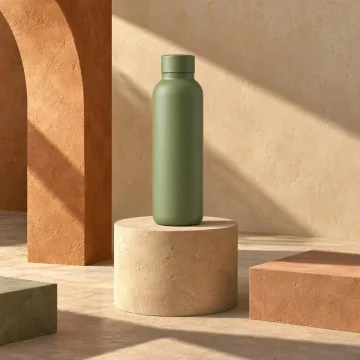
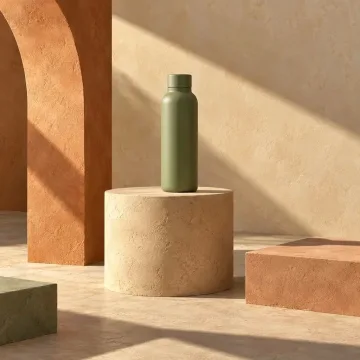
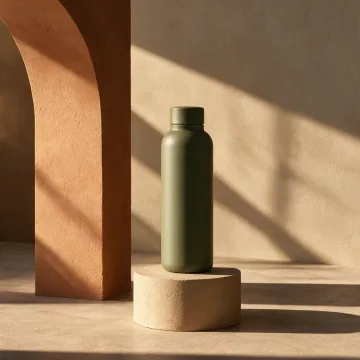
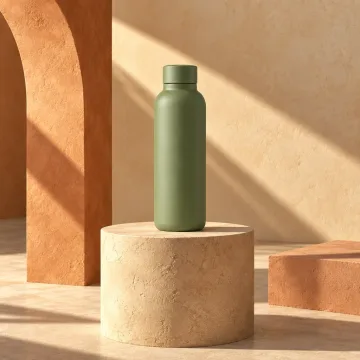
Your product. Your style. Four possibilities.
Start with your product and a style reference. Explore four AI interpretations of the look you want.
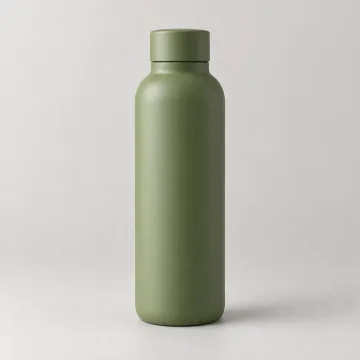

Saved examples · 4 AI models
Free credits to start · No credit card
What Do You Need to Generate Professional AI Photos?
Before opening any AI tool, you need three things prepared:
1. Clean Reference Photos
You need at least one clean reference photo per subject type. For product photography, this means:
- Shot on a white, gray, or neutral background
- Product fully in focus with even lighting
- Label or branding clearly visible
- Modern phone cameras (post-2020) are genuinely good enough for source shots
NovaBrand's research confirms that professional AI product photos start from just one clean reference photo on a neutral background.
2. A Documented Brand Profile
Your brand profile should include:
| Element | Example |
|---|---|
| Color palette | Warm golds, deep greens, cream |
| Lighting style | Soft directional, golden hour |
| Mood keywords | Elegant, organic, inviting |
| Composition rules | Centered subject, negative space left |
| Typography style | Serif, minimal |
| Texture preferences | Natural materials, soft bokeh |
MindStudio recommends generating 10–20 exploratory images to identify mood keywords, palette candidates, and consistent elements before codifying your brand guidelines.
3. Platform-Specific Requirements
Know your output requirements before generating. Amazon requires pure white backgrounds for main product images. Instagram favors 1:1 or 4:5 ratios. Your website hero may need 16:9 at high resolution. Define these upfront to avoid rework.
How to Write AI Prompts That Protect Your Brand
The difference between amateur and professional AI prompts is structure. Based on guidance from Meta AI, Picsart, and Skylum, effective prompts follow a four-part formula. For additional prompt-writing best practices, see Microsoft's guide to making AI photos with Copilot.
The Four-Part Prompt Structure
- Action — What the AI should do (generate, edit, replace background)
- Subject — What to create or modify (product, model, scene)
- Desired look — Style, lighting, mood, composition details
- Constraints — What must stay unchanged (logo, product color, proportions, face)
Example Prompts
Product photo prompt:
"Generate a lifestyle product photo of [glass bottle with green label] on a marble countertop, soft directional warm lighting, shallow depth of field, cream and gold tones. Keep label text fully legible and product proportions accurate."
Photo editing prompt:
"Change the background to a modern kitchen setting with warm natural light. Keep the product, its label, colors, and proportions exactly as they are."
The Constraint Rule
Specifying what must stay unchanged is the single most overlooked step. Without constraints, AI tools may subtly distort key brand elements — logo shapes, product colors, or label text. Meta AI's official guidance emphasizes: "Specify what should stay unchanged" in every editing prompt.
By late 2025, label-preserving models reached approximately 95% readability on the first pass. That remaining 5% is exactly why constraints and QA matter.
How to Lock Your Brand Style for Consistent AI Generation
Consistency across dozens or hundreds of images is what separates professional brand imagery from one-off experiments. The principle is simple: fix your style variables and change only the subject.
Step-by-Step Style Lock Process
- Select 3–8 reference photos that represent your ideal brand aesthetic (best-performing campaign images, approved mood board shots, or existing product photos you love)
- Identify the style attributes — analyze what makes these images feel "yours": lighting direction, color temperature, saturation levels, texture quality, composition patterns
- Document or upload these references into your AI tool's style system
- Set importance levels — decide which attributes are non-negotiable ("must keep warm golden tones") versus flexible ("composition can vary")
- Test with 3 different subjects — generate images of completely different products or scenes using the locked style to verify consistency
- Refine — adjust color temperature, lighting intensity, or mood keywords based on test results
- Save as a reusable template for all future generations in this brand
Nightjar's 2026 guide emphasizes this approach: "Fix the style, composition, model, and background as reusable settings and change only the product in each image." This is how ecommerce brands maintain catalog-level consistency across hundreds of SKUs. For those wanting even deeper customization, consider training a custom AI image model on your specific brand assets.
How Does Multi-Model Generation Improve Results?
Running your prompt across multiple AI models simultaneously is the professional equivalent of briefing several photographers and choosing the best interpretation. Each model has different strengths — some excel at lighting realism, others at texture detail or compositional creativity.
Why One Model Is Not Enough
No single AI model consistently produces the best result for every subject, style, and composition. A model that excels at editorial fashion may underperform on clean product shots. By comparing 3–4 outputs side by side, you make an art-direction decision rather than accepting whatever one model produces.
The Batch Generation Mindset
The old approach was writing one extremely detailed prompt and regenerating single images repeatedly. The modern approach — supported by NovaBrand's workflow research — is to generate 3–5 or more variants per scene and refine the best with short directional follow-ups like "softer lighting, more negative space, editorial feel."
A professional product shoot produces maybe 20 usable frames. A modern AI workflow can produce around 200 in the same afternoon. The efficiency gain comes from batch generation and rapid selection, not from perfecting individual prompts.
Step-by-Step: Generate On-Brand AI Product Photos in Under 20 Minutes
Based on documented workflows from industry sources, here is a realistic timeline for producing a finished, on-brand AI product photo:
Complete Workflow
- Capture your source image (~10 minutes) — Photograph your product on a neutral background with even lighting. A modern smartphone is sufficient.
- Set up your brand profile (~1 minute) — Input or upload your brand's color palette, lighting preferences, mood keywords, and reference photos into your AI platform.
- Write your structured prompt (~2 minutes) — Follow the four-part formula: action, subject, desired look, constraints. Include specific style keywords from your brand profile.
- Generate a batch of variants (~2 minutes) — Run your prompt across multiple models or generate 3–5 variations. Compare outputs side by side.
- Select and refine (~2 minutes) — Choose the strongest output. Apply short directional follow-ups if needed ("warmer tones," "tighter crop," "more contrast").
- QA and export (~2 minutes) — Run your quality checklist, upscale to required resolution, and export in the correct format and aspect ratio. Use Google Photos' AI editing features for quick touch-ups if needed.
Total: approximately 17–20 minutes for a production-ready image. NovaBrand's research documents 100 production-ready images as achievable in a focused afternoon using this workflow.
Quality Assurance: The On-Brand Checklist Before Publishing
Professional AI photos require the same QA process as traditional studio work. Based on Nightjar's 2026 catalog workflow, check every image against these criteria:
- Logo and text — Is all text intact and legible at final display size?
- Color accuracy — Does the product color match the real item? Compare against your physical product or Pantone reference.
- Proportions — Are product dimensions accurate? AI can subtly stretch or compress objects.
- Texture fidelity — Do materials look realistic (glass, fabric, metal, wood)?
- Catalog consistency — Does this image look like it belongs with the rest of your product library?
- Resolution — Is the image high enough resolution for zoom functionality on your platform?
- Brand style adherence — Does the lighting, color palette, and mood match your documented brand profile?
According to Shopify's Commerce Trends report, 75% of shoppers say product images directly influence their purchase decisions. A single off-brand or distorted image can undermine trust built across an entire catalog.
When to Use AI Photos vs. Traditional Photography
AI product photography is not a universal replacement for studio work. Here is where each approach excels:
| Use Case | AI Photography | Traditional Studio |
|---|---|---|
| Standard ecommerce white-background | ✅ Excellent | ✅ Excellent |
| Lifestyle/contextual scenes | ✅ Strong (2026) | ✅ Excellent |
| Catalog of 100+ SKUs | ✅ Cost-effective | ❌ Expensive |
| Regulated products (medical, food) | ⚠️ Requires careful QA | ✅ Preferred |
| Personal branding/headshots | ⚠️ Improving | ✅ Preferred |
| Rapid A/B testing of visual styles | ✅ Ideal | ❌ Impractical |
| High-detail jewelry/watches | ⚠️ Check closely | ✅ Preferred |
The economics are clear: AI ecommerce images in 2026 cost approximately $0–$2 per image versus $200–$5,000 per traditional studio session. For brands managing large catalogs, AI workflows offer dramatic savings while maintaining — or even improving — visual consistency.
Common Mistakes That Make AI Photos Look Unprofessional
Avoid these pitfalls that immediately signal "AI-generated" to viewers:
- Skipping reference photos — Generating without style references produces generic, stock-like results
- Ignoring constraints in prompts — Failing to specify what stays unchanged leads to distorted logos and inaccurate colors
- Using only one model — Accepting the first output without comparison limits quality
- Over-prompting — Extremely long, contradictory prompts confuse models; keep descriptions focused
- Neglecting QA — Publishing without checking proportions, text legibility, and color accuracy
- No brand profile — Each image generated in isolation cannot maintain catalog consistency
- Wrong resolution — Generating at low resolution then stretching, rather than upscaling properly
AvocAIdo Tip
If you are looking to operationalize the workflow described in this guide, AvocAIdo's Brand Style Intelligence lets you upload 1–8 reference photos so the platform analyzes your lighting, composition, color palette, and mood — then applies that locked style to every subsequent generation. Combined with parallel generation across four curated AI models (Grok Imagine, Seedream 5 Lite, NanoBanana 2, GPT Image 2), you compare four interpretations of every prompt and pick the winner — no prompt engineering required. The ArtDirector AI converts plain-language descriptions into professional, model-optimized prompts automatically. Start with 2,000 free credits, no credit card required.

FAQ
How do I make AI photos look more realistic?
Start with clean, well-lit reference photos that define your target aesthetic. Use structured prompts that specify lighting direction, depth of field, and material textures. Generate multiple variants and select the most natural-looking output. Finally, always specify constraints — telling the AI what must remain unchanged prevents the subtle distortions that break realism.
How many reference photos do I need for consistent brand style?
Most professional workflows recommend 3–8 reference photos that represent your ideal brand aesthetic. These should showcase your preferred lighting, color palette, composition, and mood. One reference is the minimum for basic style guidance, but 5–8 references give AI systems enough data to reliably extract and replicate your visual identity across different subjects.
Can AI product photos be used on Amazon and Shopify?
Yes, with important caveats. Amazon requires that main product images use a pure white background and accurately represent the actual shipped product. AI-generated lifestyle and contextual images can be used for secondary image slots. Shopify has fewer restrictions but still expects product accuracy. Always verify that AI-generated images faithfully represent your physical product's colors, proportions, and labeling.
What is the best prompt structure for professional AI photos?
The most effective structure uses four parts: action (what to do), subject (what to create), desired look (style, lighting, mood), and constraints (what must stay unchanged). For example: "Generate a product photo of [item] in [setting], with [lighting and mood description]. Keep [specific elements] exactly as they are." This structure, recommended by Meta AI and Picsart, consistently produces more controlled, professional results.
How much does AI product photography cost compared to studio shoots?
In 2026, AI ecommerce images typically cost between $0 and $2 per image using self-service platforms. Traditional studio product photography ranges from $200 to $5,000 per session. The cost advantage grows with volume — a brand needing 100+ product images per month may save 90% or more by switching to AI workflows while maintaining professional quality standards.
How do I maintain brand consistency across hundreds of AI-generated images?
Lock your style variables (lighting, color palette, composition, mood) as reusable settings and change only the subject in each generation. Upload reference photos that define your brand aesthetic, document non-negotiable style attributes, and use the same brand profile for every generation session. This approach, recommended by multiple industry sources, produces catalogs that look more cohesive than multi-photographer studio libraries.
Is prompt engineering still necessary for professional AI photos?
Prompt engineering is becoming less critical as tools evolve. Modern platforms offer style-lock features, prompt assistants, and template systems that handle technical prompt optimization automatically. However, understanding basic prompt structure — particularly the constraint component — remains valuable. The trend is moving from "write the perfect prompt" toward "define your brand style once and generate batches for selection."
What quality checks should I run before publishing AI product photos?
Check every image for: logo and text legibility, color accuracy against the physical product, correct proportions (AI can subtly stretch objects), realistic material textures, consistency with your existing catalog, and sufficient resolution for zoom functionality. According to Shopify research, 75% of shoppers say product images directly influence purchase decisions, making QA essential for conversion.
For more AI photography guides and tutorials, explore our full library of resources on generating professional, on-brand visuals with AI.
Put your brand style into practice.
Use a style reference to guide the look of your product images.
Free credits to start · No credit card