AI Photo Editing Free Online: Best Browser-Based Tools for Quick Edits in 2026
Discover the best free AI photo editing tools online in 2026. Compare browser-based editors for background removal, upscaling, and prompt-based edits with no downloads.
Turn this inspiration into your own images.
Bring a brief or a reference image. Explore the possibilities with four AI models.
Free credits to start · No credit card
Introduction
AI photo editing free online refers to browser-based tools that use machine learning to automate image adjustments — background removal, object erasing, upscaling, and style matching — without software downloads or upfront payment. These editors reduce per-image editing time from minutes to seconds, making them essential for content creators and e-commerce sellers producing visuals at scale. Platforms like AvocAIdo's AI-powered image editing platform take this concept further with multi-model generation and brand consistency features. In this guide, you will learn which free tools deliver the fastest results, where their limits lie, and when to upgrade to a brand-grade platform for consistent visual identity.
TL;DR
- Browser-based AI photo editors now handle most quick edits (background removal, upscaling, colour correction) without downloads.
- "Free" varies widely: some tools offer 3 edits per day, others give 5 credits, and a few require no sign-up at all.
- Prompt-based editing — typing instructions like "remove power lines" — is replacing sliders and masks as the default interface.
- Product listings with AI-enhanced images achieve 27–34% higher conversion rates than those with standard photos.
- The AI image editor market is projected to reach $8.9 billion by 2034 (15.7% CAGR from 2024).
- For brand-level consistency across campaigns, style-locking and multi-model platforms outperform single-purpose free editors.
- AvocAIdo offers 2,000 free credits with no credit card required for teams ready to move beyond quick edits.
Checklist
- ✅ Identify your primary editing need (background removal, upscaling, object removal, style change)
- ✅ Confirm whether the tool requires sign-up, credits, or neither
- ✅ Check daily or monthly free-tier limits before committing to a workflow
- ✅ Test prompt-based editing for speed — type instructions instead of masking manually
- ✅ Verify output resolution meets your channel requirements (social, web, print)
- ✅ Confirm commercial-use licensing on all exported images
- ✅ Compare at least 2–3 tools on the same image to evaluate quality differences
- ✅ Assess whether your brand needs style consistency across multiple images
- ✅ Consider batch-processing capabilities if editing more than 10 images per session
- ✅ Evaluate upgrade paths for when free limits no longer meet production volume
Made with AvocAIdo
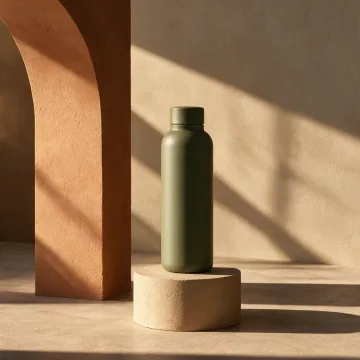
Your product. Your style. Four possibilities.
Turn a product photo and a style reference into studio-style images. Compare AI models in one place.

Saved examples · 4 AI models

Free credits to start · No credit card
What Is AI Photo Editing Free Online?
AI photo editing free online describes web-based applications that apply machine learning algorithms to analyse image content and automate adjustments like colour correction, object removal, upscaling, and style matching — all accessible through a browser at no initial cost.
Unlike traditional desktop editors that require installation and manual layer work, these tools use neural networks trained on millions of images to interpret simple text prompts or one-click commands. The result is professional-grade output in seconds rather than minutes.
The AI image editor market reached approximately $2.1 billion in 2024 and is projected to grow to $8.9 billion by 2034 at a 15.7% CAGR, confirming that these tools are not a passing trend but a structural shift in visual production.
How Does Free AI Photo Editing Work in a Browser?
Most browser-based AI photo editors follow a three-step workflow: upload your image, describe or select the edit you need, and download the result.
The Standard 3-Step Process
- Upload — Drag and drop or paste an image (JPG, PNG, or WebP) into the editor.
- Describe or Select — Type a text prompt (e.g., "remove the background" or "add warm sunlight") or click a preset action button.
- Download — Export the edited image in your preferred resolution.
This prompt-driven approach has become the default user experience. Adobe Firefly's AI photo editor, for example, lets users type instructions like "remove the power lines from the sky" to apply edits automatically, eliminating the need for manual selection tools.
The underlying technology varies — some tools use generative models for inpainting, others rely on segmentation networks for background removal — but the user-facing simplicity is consistent across the category.
Which Are the Best Free AI Photo Editing Tools Online in 2026?
Below is a curated comparison of 8 browser-based AI photo editors available for free in 2026, evaluated on speed, sign-up friction, free-tier limits, and core capabilities.
| Tool | Sign-Up Required? | Free Tier Limit | Key Strengths |
|---|---|---|---|
| Pixlr | Yes (free account) | Generous free plan with ads | Full editor suite, layers, AI tools |
| Fotor | Yes | Limited daily edits | Fast background removal, one-click enhance |
| Canva | Yes | Free plan with AI features | Design + editing combined, batch resize |
| YouCam | Yes | 5 free credits | Batch enhance (up to 50 photos), 4K upscale |
| VisualGPT | No | Unlimited basic edits | Prompt-based, no account needed |
| HeadshotMaster | No | Unlimited | 100% free, smart prompts, browser-only |
| ImgUpscaler AI | No | Daily limit | Upscaling focus, prompt-based style edits |
| Magic Hour | No | 3 free edits/day | Text-prompt editing, zero friction |
Detailed Highlights
Pixlr's free online AI photo editor positions itself as a free online Photoshop alternative, combining traditional layer-based editing with AI-powered tools for background removal, object erasing, and generative fill. It is available across browser, mobile, and desktop.
YouCam is trusted by over 800,000 verified creators and rated 4.5/5 stars. Its AI Photo Enhancer can process up to 50 photos simultaneously, making it suitable for batch workflows. New users receive 5 free credits with no credit card required.
VisualGPT requires no sign-up and follows a straightforward upload–describe–download workflow, making it ideal for users who want zero friction.
Magic Hour offers 3 free edits per day with no account needed — a practical option for occasional quick fixes.
HeadshotMaster provides unlimited free AI photo editing in the browser with no sign-up, using smart prompts to guide edits.
For users who also want creative enhancements and artistic effects, Picsart's AI-powered photo editor is another strong browser-based option with background removal, object erasure, and style transfer capabilities.
What Does "Free" Actually Mean for AI Photo Editing Online?
The word "free" in this category carries nuances that directly affect workflow reliability. Understanding these distinctions prevents mid-project surprises.
Types of Free Access
- No sign-up, no limit — Tools like HeadshotMaster and VisualGPT offer editing without accounts. Best for one-off tasks.
- No sign-up, daily cap — Magic Hour provides 3 free edits per day. Sufficient for occasional use, limiting for production.
- Free account with credits — YouCam gives 5 starter credits; advanced features cost additional credits.
- Free plan with ads or watermarks — Pixlr and Canva's AI photo editing features offer substantial free tiers but include advertising or restrict certain export options.
Hidden Friction Points
Some tools market "no download" and "no credit card" but still require account creation before editing. YouCam, for instance, emphasises frictionless access in its marketing, yet its FAQ notes that editing occurs "after signup."
For e-commerce sellers processing 20+ product images daily, free-tier limits typically become a bottleneck within the first week. At that volume, evaluating paid plans or platforms with higher credit allowances becomes necessary.
When Should You Move Beyond Free AI Photo Editing Tools?
Free browser editors excel at isolated, quick tasks: removing a background, sharpening a blurry photo, or erasing an unwanted object. They fall short in three specific scenarios.
1. Brand Consistency Across Campaigns
Free tools apply edits to individual images without memory of your visual identity. Each edit starts from zero. When producing 50+ images for a product launch, maintaining consistent lighting, colour palette, and mood across every asset requires a style-locking mechanism that consumer editors do not offer.
2. High-Volume Production
Processing 100+ images per week with a tool capped at 3–5 free edits per day is impractical. Enterprise users already account for an estimated 42.3% of AI image editor market revenue, signalling that professional teams invest in platforms designed for scale.
3. Measurable ROI on Visual Quality
Product listings with AI-enhanced images achieve conversion rates 27–34% higher than those with standard photos. When image quality directly affects revenue, the cost of a professional platform pays for itself within a few conversions.
How to Choose the Right Free AI Photo Editor for Your Needs
Follow this step-by-step process to select the tool that matches your specific workflow:
- Define your primary use case — Background removal for product photos? Upscaling for print? Style transfer for social content?
- Determine your volume — Fewer than 5 edits per day? A no-sign-up tool suffices. More than 20? Evaluate credit-based or subscription platforms.
- Test with a real image — Upload a representative photo to 2–3 tools and compare output quality side by side.
- Check output resolution — Confirm the free tier exports at the resolution your channels require (1080px for social, 2000px+ for e-commerce, 4K for print).
- Verify commercial licensing — Not all free tools grant commercial-use rights. Read terms before publishing edited images on product listings or advertisements.
- Evaluate prompt quality — Type a natural-language instruction and assess whether the AI interprets it correctly on the first attempt.
- Assess style consistency — Edit 5 different images with the same intent. Do the results look cohesive, or does each output vary unpredictably?
- Plan your upgrade path — If the free tool works well but limits volume, check whether its paid tier scales affordably for your production needs.
Prompt-Based Editing vs. Traditional Interfaces: What Changed in 2026?
The most significant shift in AI photo editing is the replacement of manual tools (lasso, mask, clone stamp) with text-based instructions. Instead of spending 3 minutes carefully selecting an object, you type "remove the person on the left" and the AI handles segmentation, inpainting, and blending in seconds.
Adobe Firefly exemplifies this approach, allowing users to type prompts like "add warm sunlight and a soft glow" to transform an image without touching a single slider.
This shift has two implications for content creators:
- Speed — Prompt-based editing reduces per-image time from minutes to seconds.
- Accessibility — Non-designers can now produce professional-quality edits without learning complex software interfaces.
However, prompt-based tools are only as good as their language interpretation. Ambiguous instructions produce inconsistent results. Platforms that include prompt enhancement — converting casual descriptions into optimised instructions — deliver more reliable outputs.
For quick quality improvements like upscaling, noise reduction, and batch enhancements, Fotor's free AI image editing tools offer a solid prompt-assisted experience alongside traditional one-click presets.
AvocAIdo Tip
When free browser editors handle your one-off fixes but fail to maintain visual consistency across a campaign, AvocAIdo bridges the gap. The platform runs 4 top AI models — Grok Imagine, Seedream 5 Lite, NanoBanana 2, and GPT Image 2 — in parallel on every generation, letting you compare outputs and pick the strongest result. Brand Style Intelligence locks your visual identity from reference photos, so every image matches your brand regardless of subject. ArtDirector AI converts plain-language descriptions into professional prompts — no prompt engineering required. Start with 2,000 free credits, no credit card needed.
For an independent overview of how these tools compare across the broader market, see Pixelbin's roundup of the best AI photo editing tools in 2026.
FAQ
Is AI photo editing free online safe to use for commercial purposes?
It depends on the tool. Some free editors (Pixlr, Canva free tier) include commercial-use rights in their terms, while others restrict commercial output to paid plans. Always verify the licensing terms before publishing edited images on product listings or marketing materials. AvocAIdo includes a commercial license on all outputs across every plan.
Do free AI photo editors require software downloads?
No. The tools listed in this guide — Pixlr, Fotor, Canva, YouCam, VisualGPT, HeadshotMaster, ImgUpscaler, and Magic Hour — all operate entirely in the browser. No heavy software downloads are required.
What is the typical free-tier limit for online AI photo editors?
Limits vary significantly. Magic Hour offers 3 free edits per day. YouCam provides 5 starter credits. HeadshotMaster and VisualGPT offer unlimited basic edits with no sign-up. Pixlr and Canva provide broad free plans with advertising or feature restrictions. Check each tool's current terms, as these limits may change.
Can free AI photo editors handle batch processing?
Most free tools process one image at a time. YouCam is an exception, allowing users to enhance up to 50 photos simultaneously with its AI Photo Enhancer. For consistent batch processing at higher volumes, paid platforms with dedicated credit systems are typically more reliable.
How does prompt-based AI photo editing differ from traditional editing?
Prompt-based editing lets you type natural-language instructions (e.g., "remove the background" or "add warm lighting") instead of manually selecting areas with tools like lasso or magic wand. Adobe Firefly and VisualGPT both use this approach, reducing editing time from minutes to seconds while making professional results accessible to non-designers.
What resolution can I expect from free AI photo editors?
Most free tools export at standard web resolution (1080–2000px). Higher resolutions (4K) are typically gated behind paid credits. YouCam offers 4K enhancement as a feature, and AvocAIdo provides 4K upscaling at 600 credits per image.
When should I switch from a free editor to a paid AI platform?
Consider upgrading when you need brand consistency across 10+ images, process more than 20 edits daily, require commercial licensing guarantees, or when conversion data shows that higher-quality visuals directly increase revenue. The 27–34% conversion uplift from AI-enhanced product images makes the business case clear for e-commerce sellers.
Do I need design skills to use free AI photo editing tools?
No. The prompt-based workflow (upload, describe, download) requires no design training. Tools like VisualGPT and HeadshotMaster are specifically built for users without technical backgrounds. For more advanced brand-level work, platforms like AvocAIdo include ArtDirector AI, which converts plain-language descriptions into optimised professional prompts. Discover more AI editing tips and tutorials on our blog.
Ready to create your own images?
Bring a brief or a reference image. Explore the possibilities with four AI models.
Free credits to start · No credit card